Friday, September 4, 2009

I read through the minutes from the 1st Meeting of the Agriculture Think Thank and I read the thoughts of Mr. Maillis.

I read and gathered that it seems there are problems and barriers that we face, in regards to the development and sustainability of agriculture in the Bahamas.

However, after identifying the problems we are faced with, I think we all need to now focus on problem-solving in the areas of agriculture in the Bahamas.

I think if we want to get more young people in agriculture, it needs to be marketed properly to those younger people involved. The same way companies market their products and services to get buyers, I think agriculture needs to be done in same way. I believe all of us can contribute and not just our government and non-government organizations (NGO’s), but the people who have remain and are passionate about developing our agriculture industry in the Bahamas.
I think our Bahamian government can contribute to help encourage young people in agriculture. This may be through offering agriculture courses and programs in secondary schools and also encouraging private schools to also get involved by offering a course in this subject area. Moreover, the government can introduce a technical program to be offered at The Bahamas Technical and Vocational Institute (BTVI).

I believe our young Bahamians just needs to be encouraged and motivated on their outlook on agriculture. And if they see agriculture positively, they may be willing to gain experience in the field of agriculture.

All of us who are in the field of agriculture know that the cost of labour is very high in the Bahamas. It was pointed out in the 1st Minutes Meeting that we have more information readily available to us now. I agree! We do have more information, but what are we going to do with this information? I believe this information we have now, just needs to be disseminate properly so we all will know what we are faced with and to offer solutions to develop and sustain our agricultural industry here in the Bahamas.

Through technical research other countries in the Caribbean and the Americas have solve ways to the problems we face here in agriculture the Bahamas. I believe we need to adopt some of those methods through technology transfer. We need look at ways how other countries nearby have encouraged and motivated young people to be active and participate in agriculture.
It was stated by Mr. Maillis and I quote “It has to change from "get rich" to making a living and creating something that benefits The Bahamas in terms of bio security and to keep dollars circulating in our economy at home.”

Bio-security refers to the policies and measures taken, for protecting a nation’s food supply and agricultural resources from both diseases and human exploitation (www.cwfs.org.au/terminology.0.html ).

I don’t think that the word bio-security was the best word to use. I think the word food security may have been used instead. However, I do think if the young people were to change their thinking of “get rich” and focus on creating new ventures in agriculture in the Bahamas this may benefit the Bahamas in terms of food security and a sustainable agriculture industry in the Bahamas.


In the 1st Agriculture Think Tank, in the meeting minutes I saw that two (2) topics were discussed.


Diversifying the Bahamian economy with Agriculture
Creating new Cottage Industry with Value-added products (e.g. juice, jam, sauces, ham roasted with native woods)


I just want to briefly share that there are so many areas agriculture can be diversified into. I believe we need to conduct a market research (SWOT analysis) to identify the opportunities for the potential markets.


There many ways we can add value to our existing Bahamian products. I strongly feel that we need to market all of our value-added products properly especially to the Bahamian people. As a tourist, one will purchase our value-added products but Bahamian prefers foreign goods and services and I believe we need to wipe out that concept in the way our people think when it comes to our value-added products and services.


In closing I believe we who are in agriculture now needed to continue to be visionaries to help encourage and motivate the young people in our society to be aware and sensitized the importance of agriculture. I believe by doing so this may add to our numbers and more young people may contribute their creativity and innovativeness to the development and sustainability of agriculture in the Bahamas.

Regards,
Raynard Burnside (September 3, 2009)
Thanks for the e-mail; I’ll definitely be at the next one.

My input on the whole issue of young people getting into agriculture...since I missed my chance earlier...

To speak bluntly ...I think that the average young person who says they are interested in agriculture is mostly naively spotting hot air and the govt. should not waste too much financial resources doing anything other than educating them.

My monologue below...

The barrier to our young people is not that they lack the resources; it is that they lack the will, are young, inexperienced, unmotivated, and mostly lazy and want to get rich from agriculture. None of which works.

Every family in the Bahamas has a piece of land that can grow something. A father, mother, uncle, aunt, sister, brother, second cousin, or friend.....Nassau or the out islands, ask around and someone has something. Maybe you can't get there every day, or can't do it all, but people have forgotten how to work part time and work together. Somewhere there is agricultural land, prepared or not that someone with the will would be able to access and do something on. For a young person, this should not be a barrier. It should be as simple as asking grandma or uncle if you can help out, or work some of their land. Maybe not 10,000 acres of deep rich soil. Maybe it is just a lot on 8th terrace that someone can have a split arrangement with the land owner to do their drip irrigation potted coco plum inventory for a onetime cash crop.... Somewhere, somehow, everyone that really cares to be involved in growing things should be able to adjust and find a spot to grow something.

Everything you need to know about anything is on the internet, or at your offices, or in the minds and memmories of the old people. Everything.

To tend grandma's yard for her just requires some patience, spirit, time and sweat. And all of those things are available to the young person if they have the will.

but to regress, we all know that farming does not make many people rich, unless you are secretive and extremely skillful at avoiding competition from entering the market and squeezing out your profits, or if you are growing marijuana on the side, which of course is illegal. And of course to get rich in agriculture, you have to be lucky, extremely determined, business oriented, marketing oriented, motivated and diligent, never accept failure, be prepared to suffer the remoteness of out island life (not that out island life does not have its benefits), .etc and have your own capital. Our young people (in general) do not have these skills, they are not graduating with these skills, and barely possess the resources or motivation or support to achieve lift off. And we don't have abundant land at least that is not a part of some long waiting line. In any case, most agricultural ventures here last 3-5 years and are bankrupt. Whoever decides to go into agriculture, comes up with a business plan, gets a grant from the Govt. or private sector, and is likely to fail anyway, even if they are mature, seasoned farmers. This is reality, and the history of our country, time and time again.

No young person aspires to the position of farm laborer, (which is not a dishonorable thing, if done honorably.) But try to compare a Haitian farm laborer with a Bahamian farm laborer, and it is night and day, honorable vs. disgraceful display of laziness, a full day’s work from the Haitian vs. negative work, trouble, issues, theft, unionization and resentment from the Bahamian, if you can find a Bahamian that wants to work on a farm for minimum wage, and that you can trust to set their eyes on your produce and not expect a nigh raid later in the evening, please let me know. We are talking motivation versus slow motion. Why? I don't know, but that is the fact. Bahamians don't want to be farm laborers, they see it as shameful, hard work and they resent the history there, understandably. So part of the challenge is convincing young people of the honor of working a farm, the pride, the accomplishment and the benefit to the country - patriotism.

So if we are talking about young people in agriculture, we must be talking about wanting young people to aspire to be land owners, business owners, entrepreneurs, merchants, organizers, etc. But this leaves us at the question of where is the laborer? Are we going to facilitate bringing in Cubans or Haitians? And how many new businesses and how many new crown grants (of land that needs to be made arable, we don't live in Oklahoma) are there really going to be for the skill less, unmotivated young person. Not nearly enough to entice them into an immediate, full time career in agriculture. As a farmer myself, I would love to hire a bunch of young people to be involved on the farm, but even at minimum wage, I would have trouble meeting costs and in any case, I don't think any of them want to be farm laborers, we are talking ownership and making a good life for them in agriculture. I as a farmer would be perpetually plagued by people I train and educate, leaving to take higher wages elsewhere and probably not in agriculture. If I pay them higher wages, I make nothing.

Most of the "successful" farmers here in the Bahamas mask their negative bottom lines with periodic injections of capital from their separate working lives. A lawyer or banker or ex stock broker who year after year refreshes his passion project with new capital, so he can keep doing what he likes.

Yes, agriculture produces produce, but the cost, most of the time is many multiples of the actual revenue benefit. The real benefit is, as mentioned by my father, the economic impact of dollars kept at home. Wages paid, materials bought, produce sold all bounce around the economy and have a multiplier effect on our GDP, national tax collection, etc. This is great, but this is a national duty, rather than a get rich plan.

Do I think young people have a future in agriculture?

Surprisingly, the answer is - Yes, but not outright-all-in agriculture and the focus of agriculture has to change. It has to change from "get rich" to making a living and creating something that benefits The Bahamas in terms of bio security and to keep dollars circulating in our economy at home. And to this end, the young person should be encouraged first to be a part time farmer. They should seek employment where possible but this will be limited unless they are willing to first work field jobs, give hard work and take low pay. But those who have a passion for it and are not only hot-air-govt.-agro welfare cases should endeavor to get interested in existing projects, or existing operations. Early to bed early to rise and help their grandparents manage their plots, (maybe they will prove themselves worthy of an inheritance), manage their family orchards, spend the summer in the out islands, or visiting farms, learning how to be content with island life, and learning the cycle of agriculture, the seasons. Watch, tour, learn, participate, help, read, save money and capital and develop themselves and their plans, as they make their living in other multiple ways. Those who have access to land need to take the time and plant a seed, watch it grow, learn about its life cycle and study it back to front. Learn to love it, respect the craft, develop a passion for it, a drive to make things work, and then think about what they can do with their skills, networks and connections.

Every young person that approaches you, or that you approach and has interest in agriculture should be encouraged to identify resources within their grasp that can get them exposure. We should focus on encouraging self help and resourcefulness, not agro-welfare. Tell them to go tend Grandma's yard, use the resources currently at hand and go out and learn. In china, they have intensive plots that can sustain a family! Let the young person get to know what it means to be involved in small things like this, instead of demanding a govt. given future.

If they still like agriculture after tending grandma's yard for a year...after they are used to hard work for nothing but the intrinsic pleasure and modest results, then maybe,....maybe they will be worthy enough to capture the attention of someone willing to put in the investment in them, be it granny or government or private sector.

You keep up the good work doing your education forums, help with resources, keep up hope, and focus on promoting self help and resourcefulness in our young people.


All the best

George Maillis (September 2, 2009)
Meeting Minutes


Meeting Date: August 27, 2009
Location: Finn Damtoft Agricultural Library

Strategic Priority: Youth in Agriculture

Objective: Network all agriculture stakeholders working with the youth of the nation- to encourage Agriculture.

Special Comments & Notations:
1. Comments from the Think Tank will be posted to the blog.
2. Encourage Careers in Agriculture
Follow Up Meeting Date &Time: September 24, 2009/4-5pm
Location: Finn Damtoft Agricultural Library

Meeting Minutes Attached
Plan Of Action: A Think Tank every last Thursday a month to discuss one topic


BNYC – Bahamas National Youth Council
BAFY – Bahamas Agricultural Forum for Youth
CAFY – Caribbean Agriculture Forum for Youth
IICA – Inter-American Institute for Cooperation on Agriculture
BAPA – Bahamas Agricultural Producers Association
BNT – Bahamas National Trust
MAMR – Ministry of Agriculture & Marine Resources

Meeting Notes:

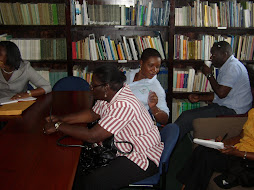
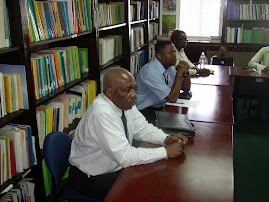
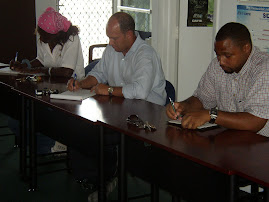
The meeting was started with a welcome, prayer (by Mrs. Telle) and introductions around the table.

First topic introduced - Diversifying the Bahamian economy with Agriculture

Astrid Cleare – Agriculture is good for diversifying the economy with a view to Agro-tourism and networking the stakeholders in the industry.

Alesha Hart – working ground level / how successful are we: strategies, effectiveness, feed ourselves, rapid assessment, and goal setting. Circulating information reports on research that has been done?

Paulette Ingraham – BAPA has done a rapid assessment of the local industry – it is not ready for public consumption. The study/project is focusing on linking agriculture and tourism (accessing the local market). The project will end this year.

Pericles Maillis –
· Told the story of the Mangoes going on Jets in the 1960’s to Harrods in London
· The Botanic Gardens had 1,000’s of improved trees
· There is a need to prune the mango trees after a hurricane (e.g. Eleuthera)
· There are reports available on many crops
· List what is happening with EPA and the Free Trade agreements
· These are hard economic times
· Agriculture can diversify the Bahamian economy
· When a tourist eats here that is an export dollar
· Generation that likes agriculture
· Sell $30,000 worth of mangoes this year at Maillis farms direct to customers and vendor wholesalers
· Produce exchange – for the small farmers/keep life in the Out Islands

Alesha Hart – Grandmother in Cat Island is growing tomatoes. Many crops are rotting at the packing house – it needs to be managed effectively.

Paulette Ingraham – Backyard farms produced food for consumption and for jams, bottling and canning (e.g. Bottled tomato and pickled onions) – which is what Cat Island can do. We need to help ourselves. Develop small family properties – like cooperatives. We used to feed ourselves at home and never bought vegetables (grew all in our backyard).

Second Topic introduced - Creating new Cottage Industry with Value-added products (e.g. juice, jam, sauces, ham roasted with native woods)

Joan Telle – Marketing of the agricultural products e.g. sun dried tomatoes or olives (Europe). Get the chefs or gourmet restaurants. We have the brain power. People become discouraged even though they love agriculture. Marketing focus.

Paulette Ingraham – BAPA’s study is looking at marketing and slowly mobilizing now. Part of the study targeting buyers and getting produce to market. Take buyer to the farmer work as a team. There are farmers’ cooperatives. Need group work to do more and there will be a roll-out by the president (Mr. I.G. Stubbs). A secretariat for information is being formed.

Pericles Maillis – Cooperatives have collapsed because of stealing and dirty politics. All have failed. There is a need for law reform. We used to work together e.g. asues, burial societies.

George Carey – grew up on Sims, Long Island. The Centre that used to be there is now closed and there are discouraged persons on the island. Needs to start from the top (incentives / duty-free / policies).

Astrid Cleare – Cooperatives active to-date: North Abaco Fish Cooperative, Abaco Agricultural Cooperative Society, Grand Bahama Agricultural Cooperative Society, Cat Island Cooperative Society and there may be a reviving one in Mayaguana.

Pericles Maillis – most of these are fairly new.

Tim Hauber – collapse of the Livestock Co-op.

George Carey – Concerned about access to land and farmer’s insurance (an issue for the Family Islands).

Tim Hauber – There is a long tern study currently being done on Agriculture Insurance. There is a risk in this industry. E.g. in the Banana industry the farmer pays 20% to cover their crop – few farmers may be able to afford this. Possible other topics: buy Bahamian, standards.

Pericles Maillis –
· 600 BC Hassid – the way of the farmer
· Thin out mangoes
· Live with the risk
· Came to Nassau from Long Island to look for land?

Tim Hauber – Land available from BAIC for a $25 acre lease. All supplies and seeds can be brought in duty-free (have to be a registered farmer) and the government is chipping in by giving a subsidy via the fish & farm store. Technical support provided by IICA (checkout out the website – www.iica.int) and lots of information can be found on-line via the University of Florida Extension site (check out their website - http://edis.ifas.ufl.edu/). We should not expect the government to give information. Their focus should be on policy and we can take the practical side. Information is pretty easy to get.

Pericles Maillis –
· Praedial larceny should have the cat-of-nine-tails to punish for this.
· Look back in history:
· Denmark – the Vikings came and were Christianized then became farmers (grew grain) and fishermen (church instituted eating fish on Friday and Wednesday). See: History of Denmark http://pip.dknet.dk/~pip261/denmark.html#Agriculture
· Railroads and canals put into the mid-west (Ohio and Illinois). The price of wheat and corn crashed after 1,000 years in Europe when cheaper grain could be imported from the mid-west/prairies.
· What they did in Denmark – they created a Think Tank of everyone – scientists and farmers. They looked at the culture and came up with a focus on Diary (butter/cheese) and Pork. They stopped growing wheat (etc.) on a large scale and built the Danish product/brand using a co-op system where the co-op owned the machinery and factories.
· Mango – can produce to slice and freeze, dried mango, canned and fruit rolls. Our dream is to plant 1,000 trees producing around $100/tree. Currently the farm has 400 trees, 40 varieties.
· Looking now at the caramabola to produce drinks (Tropicana Bahama)
· Ornamental trees can be grown with the mangoes in plastic bags that allow the roots to grow.
· We are part-time farmers, like the old soldiers who were given land. Family farms could be developed if e.g. 30 persons give $100/month for development
· Go through pour own culture: Geneva Cartwright – Deadman’s Cay / Andros – produced Cassava Flour
· Economic history of the US – their patriotic zeal where they used us made products – BUY AMERICAN. Encourage our people more than the merchants (who buy dumped crops and make a killing) – buyer security. Gave example of Mr. Albury’s cucumber crop being sent back from Florida to protect the Florida farmer/market.
· Buy Bahamian!!
· E.g. Jamaica (check out their website - http://www.moa.gov.jm/) – eat what you grow and grow what you eat and Trinidad & Tobago (check out their website - http://www.agriculture.gov.tt )

Tuesday, September 1, 2009

Thank you to all who attended and participated in the Agricultue Think Tank, held last week Thursday. The next one will be held on Thursday, September 24, 4-5pm at the Finn Damtoft Agriculture Library. We hope to see you there, prepared to talk about:
Buy Bahamian!!
For those who caould not make it to the first one - be there for the next!