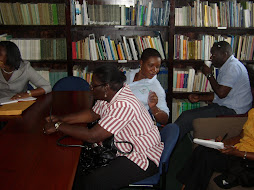
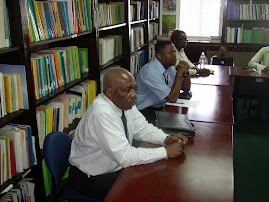
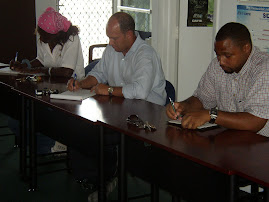
- Meeting Notes:
· The meeting was started with a welcome, prayer, scripture verse by Astrid Cleare
· Bio on Mr. Francis Davis:
o Mr. Francis I. Davis was born in Nassau. He received his primary education at St. Francis and St. Thomas Moore Schools; and his high school education at St. Augustine’s College and St. Michael’s College in Toronto, Canada.
o Francis received his University education at the University of Toronto and the University of Miami.
o In 1965 while at the University of Toronto, Francis joined his first cooperative.
o After completing a Bachelors Degree in General Science, Francis worked in Computer and Banking and then went on to the Oil Industry where he worked for twenty years at BORCO in Freeport.
o In 1996, Francis joined the Bahamas Cooperative League as General Manager.
· Co-operative – what is a co-operative?
o Shared vision
o Group – put in what it takes to make a vision reality/they are the owners (members are part owners)
o E.g. mutual insurance – each holder is an owner
o Owner and customers are the same
· Co-operatives have failed in the Bahamas
· Open-say in running the business
· AGM vote – one vote, not depending on how much you have
· Capital injection
· Small share holders
· E.g. purchase other co-operatives, need capital?
· May not be able to do this, there are limitations
· Mutual – stockholder companies’ insurance companies needed a lot of capital
· Stockholders take a risk in the company
· Attract capital funding?
· Equity shares – over and above the minimum/invested in the co-operative
· Ideas may be bigger than the money
· Co-operative grow steady-could be great (high numbers)
· If members don’t use the service
· E.g. power plant on family island (Green Turtle cay/Spanish Wells)
· E.g. agricultural Co-operative – sell products may sell items themselves, use services and appreciated help members to grow in capacity
· Does business via co-op then can grow?
· Encourage persons to grow wealth
· Educate members to do better
· Farmers produce – co-operatives sell
· How can members of the co-operative get more than what they what have gotten from another source?
· E.g. handicrafts – want members to do better
· E.g. crops – what happens the rest of the year – come together and do an add-on
· E.g. Florida Citrus juice (http://www.floridasnatural.com/co-op/meet-the-co-op)
· Juice vs. selling oranges
· Own the production facility
· Own the agricultural equipment
· No examples of that here – want to step up to this point
· Informal co-operatives e.g. Spanish Wells one persons sells and the others fish
· Benefits of a registered co-operative/entity
· Government checks and balances (legal instrument/standards)
· Stamp tax exemption with checks
· Danette Malcolm - Any attempt made to set up a manufacturing co-operative?
· Davis – tomato-bottling products in Eleuthera
· War supply of bottled vegetable in the past
· Sawyers, Albury’s
· Small – Co-operatives in Long Island – Natural Products (jams/juice/Yuma Gold – alcoholic mix)
· Not functioning now
· Challenges?
· Settlement of the lime at the top – made the product look inferior
· Marketing
· Bahamians are beer-drinkers; the product was good for mixed drinks
· Consultants advised on production
· More attention needed to be spent on who would use the product
· Produce – local and export market
· Workers were the owners and were paid as the product sold
· Became disgruntled with the lack of regular paychecks – there was a wait for monies
· Operational efficiency
· Lemons grown in Abaco
· Shipping from Abaco – New Providence – Long Island
· Trucks were $120 to move products from the boats / timing
· Had to rely on the transportation system – a lot of handing of the product
· Business plan – movement of the raw material
· No real volume in sales
· Agriculture need to grow enough to be a business – not a hobby
· Effort, sales, profit, herbicide, fertilizer, making a living or fun?
· Delay payments, need working capital, need to operate efficiently
· 1 vote concept – no matter how much dollars you have invested
· Growth may be limited to
· Can sell in larger amounts to the hotel now that you work together in a group – benefit from this business
· Added-value, second level of business
· E.g. potato – potato chips
· Provides employment
· Improved quality of life
· Societies prosper when people spend money
· Recession 2007 – 2010, the consumer pulled back on spending
· Improve quality of life/ growth of the economy / larger GDP have more $’s to spend
· This should be measurable
· E.g. 4% interest on savings
· 15% consumer loan
· 15% credit card
· The numbers are important
· Focus on getting new members?
· More deposits – then more $’s to lend
· High interest, secure, regulated by the government
· Be prepared to grow slowly
· Put reserves aside
· Surplus – dividends/divided among everyone based on how much business you have done
· E.g. Canada co-op farmers get kicks backs from co-op based on how much services used from the co-op
· Provide service
· Need to be profitable to stay in business
· Surplus given to members
· Failures – have to change with the times
· E.g. Mayaguana – service diesel for generators then BEC came
· Fortune to recognize change required to grow market
· Risk is high in agriculture – hurricanes/drought/salt-water intrusion
· Competing against imports
· Government support?
· Tariffs – soon to be illegal with the EPA. Government will do this if you show that you can serve the market
· Will soon be a thing of the past with WTO trade has to be open
· Has to be documented
· We can’t depend on Made in the Bahamas but on quality
· Can’t encourage inferior products
· Making and selling – for the economy
· Keep some dollars in the country – production of quality products
· Need a bureau of standards
· Can a co-operative be formed for this?
· No, this will be a government initiative
· SPS/HACCP standards
· Being done now with fisheries
· International standards – well documented
· Standards have to be reasonable and meet the test/WTO
· Bahamas has to be prepared to compete
· We did this with lobster and sponging
· Niche market – set yourself apart
· Consumer interest groups here?
· Talked about
· Government has price-control unit to protect the consumer
· Any agricultural marketing co-operatives?
· E.g. BCLL acted as the marketing co-operative
· Inferior onions – Exuma
· Unpasteurized juice – Long Island
· Large scale done in Grenada (Nutmeg) and in Florida (Florida Growers)
Friday, December 18, 2009

Monday, October 26, 2009
Agriculture Think Tank #3 What is SPS?
Key:
BNYC – Bahamas National Youth Council
BAFY – Bahamas Agricultural Forum for Youth
BCOC – Bahamas Chamber of Commerce
BIS – Bahamas Information Services
CAFY – Caribbean Agriculture Forum for Youth
CITES - Convention on International Trade in Endangered Species
EPA - Economic Partnership Agreement
IICA – Inter-American Institute for Cooperation on Agriculture
BAPA – Bahamas Agricultural Producers Association
BNT – Bahamas National Trust
MAMR – Ministry of Agriculture & Marine Resources
OIE - World organization for animal health
CODEX - The Codex Alimentarius Commission was created in 1963 by FAO and WHO to develop food standards, guidelines and related texts such as codes of practice under the Joint FAO/WHO Food Standards Programme. The main purposes of this Programme are protecting health of the consumers and ensuring fair trade practices in the food trade, and promoting coordination of all food standards work undertaken by international governmental and non-governmental organizations.
WTO - World Trade Organization
BAFY Blog - http://bahamasagriculturalforumforyouth.blogspot.com/
Meeting Notes:
The Meeting got started with a short Welcome and Introduction of the feature Presenter: Dr. Maurice Isaacs (Veterinary Officer – Department of Agriculture)
Power point presentation on: What is SPS?
Danette Malcolm – Is there progress towards a lab based surveillance program?
Dr. Isaacs – We are not members of the OIE or WTO. We should be doing surveillance and testing (lab based program) e.g. in 1998 – tested for rabies. There is a book sent out on the status of each disease for each country.
Tim Hauber – might feel extra vulnerable with Conch, for example then can propose to keep certain things out of the country.
Dr. Isaacs – mad cow disease the meat was banned from the Bahamas even though they said it was safe (in Europe).
Dr. Hepburn – cannot having a lab be justification for not bringing in?
Dr. Isaacs – No ignorance does not excuse, developed countries had resources - able to develop capacity, but not developing countries (Bahamas as an observer).
Part of the regional 2002: initiative of the Americas
Participate at SPS meetings: The Bahamas participated and got SPS committee started and is still formalizing to be recognized. We are being left out of the loop (e.g. EPA negotiations – all countries that sign are able to trade with each other under the WTO rules)
· E.g. Pink Mealy Bug (used the predatory wasp and lady bug to combat)
· Citrus canker
· Heart worm in dogs
Try to keep out disease but we have open borders
Dr. Hepburn – incubation period – send samples away to be tested since there is no lab?
Dr. Isaacs – no, cannot say incubation period / have been talks with the Ministry of Finance
Canada in discussions with the Caribbean in November. We are not an island but a globe – Global position – how do we protect ourselves? Can’t just depend on the U.S. – they are also overhauling their system after the E. coli and peanut butter outbreaks. SPS deals with a wide spectrum of activities to mainly protect your human health.
Rionda Godet – is there a protocol for algae eating snails?
Dr. Isaacs – Yes, for pet stores but not to be released in the environment (e.g. Dolphins – CITES, Bahamas has been a member since 1979). You have to look at if you are a member of these agreements and abide by all their laws. Private standards – companies will look at other issues besides health e.g. fair treatment of workers.
AAC – do you look at domestic and wild populations of animals?
Dr. Isaacs – Yes, but do you have the capacity? E.g. Avian Influenza was in the wild populations vs. the domestic, here in the Bahamas.
AAC – If there is a concern about items passing through the country for shipping, what about our port in Freeport?
Dr. Isaacs – taking a risk. Agriculture is viewed as a whole and not just what is on the ground – this affects us all. We have no quarantine facilities (our limited capacity). We are at serious risk and could be getting into further risks – more problems may pop-up.
Anthony Plakaris – Are we putting in place the SPS committee?
Dr. Isaacs – The 2008 project is finished and the sponsorship is finished. We are trying to get the SPS committee formally recognized and formalized with a budget. We are organizing representation for the meetings and sharing information to put into regulations and permits for our standards. E.g. who is the focal point for CODEX? Who is going to meetings and what is the information to share? There is a need to go to meetings with our national position and come back to share information.
Dr. Hepburn – What is the way forward – the attack plan?
Dr. Isaacs - the committee has drafted a cabinet paper
Dr. Hepburn – having a lab for our testing – is this possible within 3-5 years?
Dr. Isaacs – We need to inform the public and have more people involved to let them know how much we need labs and what it means for us.
Dr. Hepburn – Enjoyed the presentation, and this presentation should be on a grander scale.
Dr. Isaacs – historically we do things and don’t worry about the public – was on a need-to-know basis. BIS is responsible for all government news but each department should have its own BIS.
Dr. Hepburn – how can we get this information out? What are we going to do?
General question: Can we use BNT to get the message out?
Dr. Isaacs – We need to push these things that will affect our children and grand-children. You can’t just unsign from an agreement. Trying now to get the SPS formalized under the MAMR using IICA as the secretariat along with participation from BCOC and Department of Public Health. SPS meeting participants from the Department of Agriculture held in Geneva, Switzerland: Mrs. Gwen Hammerton (9 meetings), Dr. Maurice Isaacs (3 meetings), Dr. Butler (1 meeting) and Dr. Springer (1 meeting).
Anthony Plakaris – BAPA was formed to get information like this out to the public. There has been no recent AGM. IICA or MAMR can’t be the voice, let BAPA be out there in the public – show tenacity/be out there to push!
Dr. Isaacs – Mr. Mark Stubbs has been on the committee and we need all stakeholders to be involved.
Dr. Hepburn – need to send this information out to the farmers via Mr. Paulette Ingraham.
Dr. Isaacs – some markets international are not accessible to our farmers now – we must learn from this.
Paulette Ingraham – was BAPA invited to be a part of the committee?
Dr. Isaacs – yes.
Dr. Hepburn – what happened to all this information from the Agriculture Think Tank meetings?
AAC – the information is sent out to the group, the general data base and the media.
BNYC – Bahamas National Youth Council
BAFY – Bahamas Agricultural Forum for Youth
BCOC – Bahamas Chamber of Commerce
BIS – Bahamas Information Services
CAFY – Caribbean Agriculture Forum for Youth
CITES - Convention on International Trade in Endangered Species
EPA - Economic Partnership Agreement
IICA – Inter-American Institute for Cooperation on Agriculture
BAPA – Bahamas Agricultural Producers Association
BNT – Bahamas National Trust
MAMR – Ministry of Agriculture & Marine Resources
OIE - World organization for animal health
CODEX - The Codex Alimentarius Commission was created in 1963 by FAO and WHO to develop food standards, guidelines and related texts such as codes of practice under the Joint FAO/WHO Food Standards Programme. The main purposes of this Programme are protecting health of the consumers and ensuring fair trade practices in the food trade, and promoting coordination of all food standards work undertaken by international governmental and non-governmental organizations.
WTO - World Trade Organization
BAFY Blog - http://bahamasagriculturalforumforyouth.blogspot.com/
Meeting Notes:
The Meeting got started with a short Welcome and Introduction of the feature Presenter: Dr. Maurice Isaacs (Veterinary Officer – Department of Agriculture)
Power point presentation on: What is SPS?
Danette Malcolm – Is there progress towards a lab based surveillance program?
Dr. Isaacs – We are not members of the OIE or WTO. We should be doing surveillance and testing (lab based program) e.g. in 1998 – tested for rabies. There is a book sent out on the status of each disease for each country.
Tim Hauber – might feel extra vulnerable with Conch, for example then can propose to keep certain things out of the country.
Dr. Isaacs – mad cow disease the meat was banned from the Bahamas even though they said it was safe (in Europe).
Dr. Hepburn – cannot having a lab be justification for not bringing in?
Dr. Isaacs – No ignorance does not excuse, developed countries had resources - able to develop capacity, but not developing countries (Bahamas as an observer).
Part of the regional 2002: initiative of the Americas
Participate at SPS meetings: The Bahamas participated and got SPS committee started and is still formalizing to be recognized. We are being left out of the loop (e.g. EPA negotiations – all countries that sign are able to trade with each other under the WTO rules)
· E.g. Pink Mealy Bug (used the predatory wasp and lady bug to combat)
· Citrus canker
· Heart worm in dogs
Try to keep out disease but we have open borders
Dr. Hepburn – incubation period – send samples away to be tested since there is no lab?
Dr. Isaacs – no, cannot say incubation period / have been talks with the Ministry of Finance
Canada in discussions with the Caribbean in November. We are not an island but a globe – Global position – how do we protect ourselves? Can’t just depend on the U.S. – they are also overhauling their system after the E. coli and peanut butter outbreaks. SPS deals with a wide spectrum of activities to mainly protect your human health.
Rionda Godet – is there a protocol for algae eating snails?
Dr. Isaacs – Yes, for pet stores but not to be released in the environment (e.g. Dolphins – CITES, Bahamas has been a member since 1979). You have to look at if you are a member of these agreements and abide by all their laws. Private standards – companies will look at other issues besides health e.g. fair treatment of workers.
AAC – do you look at domestic and wild populations of animals?
Dr. Isaacs – Yes, but do you have the capacity? E.g. Avian Influenza was in the wild populations vs. the domestic, here in the Bahamas.
AAC – If there is a concern about items passing through the country for shipping, what about our port in Freeport?
Dr. Isaacs – taking a risk. Agriculture is viewed as a whole and not just what is on the ground – this affects us all. We have no quarantine facilities (our limited capacity). We are at serious risk and could be getting into further risks – more problems may pop-up.
Anthony Plakaris – Are we putting in place the SPS committee?
Dr. Isaacs – The 2008 project is finished and the sponsorship is finished. We are trying to get the SPS committee formally recognized and formalized with a budget. We are organizing representation for the meetings and sharing information to put into regulations and permits for our standards. E.g. who is the focal point for CODEX? Who is going to meetings and what is the information to share? There is a need to go to meetings with our national position and come back to share information.
Dr. Hepburn – What is the way forward – the attack plan?
Dr. Isaacs - the committee has drafted a cabinet paper
Dr. Hepburn – having a lab for our testing – is this possible within 3-5 years?
Dr. Isaacs – We need to inform the public and have more people involved to let them know how much we need labs and what it means for us.
Dr. Hepburn – Enjoyed the presentation, and this presentation should be on a grander scale.
Dr. Isaacs – historically we do things and don’t worry about the public – was on a need-to-know basis. BIS is responsible for all government news but each department should have its own BIS.
Dr. Hepburn – how can we get this information out? What are we going to do?
General question: Can we use BNT to get the message out?
Dr. Isaacs – We need to push these things that will affect our children and grand-children. You can’t just unsign from an agreement. Trying now to get the SPS formalized under the MAMR using IICA as the secretariat along with participation from BCOC and Department of Public Health. SPS meeting participants from the Department of Agriculture held in Geneva, Switzerland: Mrs. Gwen Hammerton (9 meetings), Dr. Maurice Isaacs (3 meetings), Dr. Butler (1 meeting) and Dr. Springer (1 meeting).
Anthony Plakaris – BAPA was formed to get information like this out to the public. There has been no recent AGM. IICA or MAMR can’t be the voice, let BAPA be out there in the public – show tenacity/be out there to push!
Dr. Isaacs – Mr. Mark Stubbs has been on the committee and we need all stakeholders to be involved.
Dr. Hepburn – need to send this information out to the farmers via Mr. Paulette Ingraham.
Dr. Isaacs – some markets international are not accessible to our farmers now – we must learn from this.
Paulette Ingraham – was BAPA invited to be a part of the committee?
Dr. Isaacs – yes.
Dr. Hepburn – what happened to all this information from the Agriculture Think Tank meetings?
AAC – the information is sent out to the group, the general data base and the media.
Friday, October 9, 2009
Job Postings:
1. Gardener at the Atlantis, Landscaping Department. Please check out http://www.atlantispijobs.com/
2. THE GARDENS NURSERY - MAINTENANCE SERVICE AND NURSERY ATTENDANT
JOB DESCRIPTION
Maintain interior plants in accounts: Watering, cleaning, set up in new accounts.
Assist in nursery work: Watering and cleaning of plants, sales and assisting customers.
Salary according to experience.
1. Gardener at the Atlantis, Landscaping Department. Please check out http://www.atlantispijobs.com/
2. THE GARDENS NURSERY - MAINTENANCE SERVICE AND NURSERY ATTENDANT
JOB DESCRIPTION
Maintain interior plants in accounts: Watering, cleaning, set up in new accounts.
Assist in nursery work: Watering and cleaning of plants, sales and assisting customers.
Salary according to experience.
QUALIFICATIONS
Well kept, well spoken, polite, and clean Police record.
Very good understanding of Customer Service.
Agricultural background and experience with plants.
Experience in sales would be an asset.
Valid driver's licence, good driving record.
Please contact: Marc-- THE GARDENS NURSERYOrchids & Bromeliads - Interior Plant Maintenance Service - Landscaping Plants - Pots - Garden Supplies and Tools12 St. Alban's Drive, Nassau, BahamasPO Box AP59223 #519Tel 242-326-3401Fax 242-322-4243
Thursday, October 1, 2009
I did some checking with David Knowles, the former Agriculture agent prior to Mr. Gibson and was told that the gassing building is not suited to processing but the plan was to build another building and tie into the plumbing and electric already in place. This seems like an avenue that could be well served and managed by an independent company perhaps to lease from the Department of Agriculture? It just sits there……………
Daphne
Daphne
Tuesday, September 29, 2009
Meeting Date: September 24, 2009
Location: Finn Damtoft Agricultural Library
Strategic Priority: Youth in Agriculture
Objective: Network all agriculture stakeholders working with the youth of the nation- to encourage Agriculture.
Special Comments & Notations:
1. Comments from the Think Tank will be posted to the blog.
2. Encourage Careers in Agriculture
Follow Up Meeting Date &Time: October 22, 2009/4-5pm
Location: Finn Damtoft Agricultural Library
Meeting Minutes Attached
Plan Of Action: A Think Tank every last Thursday a month to discuss one topic
Meeting Notes:
The meeting was started with a welcome, prayer (by Anthony Plakaris).
LaMonica Glinton – BAIC Agriculture Manager for Marketing
* “Buy Fresh, Buy Bahamian” campaign – developing this program
* Similar to the USDA “Buy Fresh, Buy Local” campaign
* Service is available to all local producers and will be launched in a press conference
* Logo: available to registered farmers
* Guarantee you are producing local
* Radio ads/TV
* Launching in November to catch the local production season
* Logo available in various sizes
* “Produce of the Bahamas” boxes in the making
Rionda Godet
* Is it available for bottled products?
LaMonica Glinton
* No – because it is not a fresh product
* There is another project “Buy Bahamian”, now done by Carter Marketing, that bottled products can be done under. Super Value is the forerunner for this program and has a month dedicated to it.
Anthony Plakaris
* What is there to safeguard people putting imports into the boxes?
LaMonica Glinton
* That producer will lose their privileges with the program.
George Maillis
* Will there be provided a consolidation point to sell produce or do the marketing?
LaMonica Glinton
* Identifying the produce as locally grown/Super Value is selling local produce now without proper labeling.
George Maillis
* Need better coordination with the Farmer’s Markets.
LaMonica Glinton - NPCC Farmer’s Market has no farmers at the market
Have been buying produce from the Family Islands and selling
There was one farmer who was there before for one hour
The table spaces are being sold for $10
We welcome farmers and variety
Customers want interaction with the farmers
George Maillis
* Is the Farmer’s Market well attended? Things get sold?
Rionda Godet
* Season as an issue, had a competitor in Lucayan Tropical.
LaMonica Glinton
* Encourage persons to grow specialty crops – Lucayan Tropical has a steady produce e.g. green peppers vs. coloured peppers / geared towards the farmer’s market.
Paulette Ingraham
* If you came at 9:30am to the Farmer’s Market all the produce is gone. (Gave an example).
LaMonica Glinton
* There are 700 persons on the mailing list and 400 on the NPCC mailing list – persons also share the emails/there are new clients out all the time.
Anthony Plakaris
* Need to bring agriculture to the point to compete with tourism
* 60% of the population between the ages of 14 – 35 years (some are unemployed)
* Write a paper plan and track a future
* Build relationships
* Talk and networking and nothing happens
* Need to start documenting e.g. document the goat pepper as a Bahamian variety of pepper
* Need a national agenda
* We need to make noise
* There is a proper way of doing things – document
* Proper statistics – we need the truth/data collection
* Looking at the dollar factor
George Maillis
* That is a gap identified – registered farmers should report their data. With each annual renewal, the fee should be paid and the data reported
* Who’s in charge? Find a way to get farmers to report.
Godfrey Eneas
* The Ministry of Agriculture is non-functioning – there is no extension staff in New Providence or the Family Islands.
* Produce Exchange depended on for information/operating in a vacuum.
George Maillis
* Why are they non-functioning?
Godfrey Eneas
* They are not organized. Agriculture is dying in this country.
* Leslie Minns in 1978 had a list of farmers that has declined. People are hoarding land because there is no timeframe to develop leased land – no follow-up and needs farm inspection in Ministry of Agriculture.
Anthony Plakaris
* We know this already – what will be put in place to move forward?
Godfrey Eneas
* The Barbados Agriculture Society is now responsible for extension work for example, who is the same as BAPA. Get out of the Government doing extension work.
Rionda Godet
* Need BAPA to get up and get running.
LaMonica Glinton
* Trying to encourage MEMBERSHIP. There is an old face on a new organization – can BAPA represent me? It is not working e.g. Jamaica Agriculture Producers.
Godfrey Eneas
* How can you vote if you are not a member? Preconceived ideas – defeatist attitude.
Paulette Ingraham
* Mr. Stubbs has been at the head for seven years. The AGM is coming up to reinvigorate the association – members need to take a stand.
Rionda Godet
* Will run for board of Director and need your support.
Daphne deGregory W
* We do buy Bahamian everything at Abaco Neem. All products have made in the Bahamas on it – we are a walking advertisement.
* Should we join the local co-op or join BAPA? Co-op does not have proper accounting ($700 to join).
Godfrey Eneas
* Annual audit done by the Department of Co-operatives, the Ministry is not doing what they are supposed to do.
LaMonica Glinton
* On-going nepotism – lack of accounting.
Daphne deGregory
* China coming to open a large farm – what is being done? You guys have the ear of the government – will they be required to use local farmers?
Paulette Ingraham
* BAIC regrouping co-operatives to get them back on track to represent on the BAPA board.
George Maillis
* Foreign investors, will they be included in the Buy Bahamian campaign?
Astrid Cleare
* The Bahamas has an export policy for produce grown here by foreign companies (to protect the local market).
Godfrey Eneas
* Don’t know if this policy is still the case.
George Maillis
* What about a buyback program once the foreign company gets the industry back up and running?
Godfrey Eneas
* This has happened before e.g. Sugar Bowl (bought back when the bail prices of sugar dropped)/this example is also in my book.
LaMonica Glinton
* e.g. Star in Abaco shipped to Florida, packaged the produce and shipped it back to the Bahamas.
Daphne deGregory
* Packing house that will package the produce to sell to the stores. China should also have to use local farmers.
Godfrey Eneas
* Bahamian labor is expensive, will use Haitian labor.
Daphne deGregory
* No, Chinese labor because Haitian labor will be too expensive (address this issue).
Anthony Plakaris
* Accountability
* National agenda
* BAPA marketing strategy
* Encourage people to become members – no more cover up
* How many ways are there to get rich? There is too much greed – cannot sweep under the rug
* Use the Think Tank to develop new ideas and put them on paper. Join an organization to make change – we are in.
Daphne deGregory
* Help each other – must have to help each other to develop.
* BAIC – give land with no information or help/plan
* Tourists – can’t get local fruit, hotels are importing
* We need to set people up for success
* Rotate different crops of what grows when and balance the demand/collaborate efforts
George Maillis
* de Gregory and Plakaris are talking at the two extreme ends
* Coordinate between the farmers
* Kick off at the root source must come from the bottom up and use resources to properly market with good prices
* Helping each other /not waiting for the government to start anything
Daphne deGregory
* China is the most polluted country – protect the water table.
Godfrey Eneas
* BAPA is a conduit for change - politician will listen to 500 farmers.
LaMonica Glinton
* Join BAPA? Show how we are moving forward – show a plan.
** Intense discussion about BAPA ensues**
Paulette Ingraham
* Change the government from the outside.
* BAPA was formed with Mr. Stubbs’s own money.
Daphne deGregory –
* Etienne is the new president of the Abaco Co-operative.
* There is an empty gassing building (for produce) that can be used as a packing house.
LaMonica Glinton
* Invitation to the NPCC Farmer’s Market Sweet Potato Festival this Saturday (September 26).
Godfrey Eneas
* JCN – invitation to come on JCN TV and talk about these issues.
Location: Finn Damtoft Agricultural Library
Strategic Priority: Youth in Agriculture
Objective: Network all agriculture stakeholders working with the youth of the nation- to encourage Agriculture.
Special Comments & Notations:
1. Comments from the Think Tank will be posted to the blog.
2. Encourage Careers in Agriculture
Follow Up Meeting Date &Time: October 22, 2009/4-5pm
Location: Finn Damtoft Agricultural Library
Meeting Minutes Attached
Plan Of Action: A Think Tank every last Thursday a month to discuss one topic
Meeting Notes:
The meeting was started with a welcome, prayer (by Anthony Plakaris).
LaMonica Glinton – BAIC Agriculture Manager for Marketing
* “Buy Fresh, Buy Bahamian” campaign – developing this program
* Similar to the USDA “Buy Fresh, Buy Local” campaign
* Service is available to all local producers and will be launched in a press conference
* Logo: available to registered farmers
* Guarantee you are producing local
* Radio ads/TV
* Launching in November to catch the local production season
* Logo available in various sizes
* “Produce of the Bahamas” boxes in the making
Rionda Godet
* Is it available for bottled products?
LaMonica Glinton
* No – because it is not a fresh product
* There is another project “Buy Bahamian”, now done by Carter Marketing, that bottled products can be done under. Super Value is the forerunner for this program and has a month dedicated to it.
Anthony Plakaris
* What is there to safeguard people putting imports into the boxes?
LaMonica Glinton
* That producer will lose their privileges with the program.
George Maillis
* Will there be provided a consolidation point to sell produce or do the marketing?
LaMonica Glinton
* Identifying the produce as locally grown/Super Value is selling local produce now without proper labeling.
George Maillis
* Need better coordination with the Farmer’s Markets.
LaMonica Glinton - NPCC Farmer’s Market has no farmers at the market
Have been buying produce from the Family Islands and selling
There was one farmer who was there before for one hour
The table spaces are being sold for $10
We welcome farmers and variety
Customers want interaction with the farmers
George Maillis
* Is the Farmer’s Market well attended? Things get sold?
Rionda Godet
* Season as an issue, had a competitor in Lucayan Tropical.
LaMonica Glinton
* Encourage persons to grow specialty crops – Lucayan Tropical has a steady produce e.g. green peppers vs. coloured peppers / geared towards the farmer’s market.
Paulette Ingraham
* If you came at 9:30am to the Farmer’s Market all the produce is gone. (Gave an example).
LaMonica Glinton
* There are 700 persons on the mailing list and 400 on the NPCC mailing list – persons also share the emails/there are new clients out all the time.
Anthony Plakaris
* Need to bring agriculture to the point to compete with tourism
* 60% of the population between the ages of 14 – 35 years (some are unemployed)
* Write a paper plan and track a future
* Build relationships
* Talk and networking and nothing happens
* Need to start documenting e.g. document the goat pepper as a Bahamian variety of pepper
* Need a national agenda
* We need to make noise
* There is a proper way of doing things – document
* Proper statistics – we need the truth/data collection
* Looking at the dollar factor
George Maillis
* That is a gap identified – registered farmers should report their data. With each annual renewal, the fee should be paid and the data reported
* Who’s in charge? Find a way to get farmers to report.
Godfrey Eneas
* The Ministry of Agriculture is non-functioning – there is no extension staff in New Providence or the Family Islands.
* Produce Exchange depended on for information/operating in a vacuum.
George Maillis
* Why are they non-functioning?
Godfrey Eneas
* They are not organized. Agriculture is dying in this country.
* Leslie Minns in 1978 had a list of farmers that has declined. People are hoarding land because there is no timeframe to develop leased land – no follow-up and needs farm inspection in Ministry of Agriculture.
Anthony Plakaris
* We know this already – what will be put in place to move forward?
Godfrey Eneas
* The Barbados Agriculture Society is now responsible for extension work for example, who is the same as BAPA. Get out of the Government doing extension work.
Rionda Godet
* Need BAPA to get up and get running.
LaMonica Glinton
* Trying to encourage MEMBERSHIP. There is an old face on a new organization – can BAPA represent me? It is not working e.g. Jamaica Agriculture Producers.
Godfrey Eneas
* How can you vote if you are not a member? Preconceived ideas – defeatist attitude.
Paulette Ingraham
* Mr. Stubbs has been at the head for seven years. The AGM is coming up to reinvigorate the association – members need to take a stand.
Rionda Godet
* Will run for board of Director and need your support.
Daphne deGregory W
* We do buy Bahamian everything at Abaco Neem. All products have made in the Bahamas on it – we are a walking advertisement.
* Should we join the local co-op or join BAPA? Co-op does not have proper accounting ($700 to join).
Godfrey Eneas
* Annual audit done by the Department of Co-operatives, the Ministry is not doing what they are supposed to do.
LaMonica Glinton
* On-going nepotism – lack of accounting.
Daphne deGregory
* China coming to open a large farm – what is being done? You guys have the ear of the government – will they be required to use local farmers?
Paulette Ingraham
* BAIC regrouping co-operatives to get them back on track to represent on the BAPA board.
George Maillis
* Foreign investors, will they be included in the Buy Bahamian campaign?
Astrid Cleare
* The Bahamas has an export policy for produce grown here by foreign companies (to protect the local market).
Godfrey Eneas
* Don’t know if this policy is still the case.
George Maillis
* What about a buyback program once the foreign company gets the industry back up and running?
Godfrey Eneas
* This has happened before e.g. Sugar Bowl (bought back when the bail prices of sugar dropped)/this example is also in my book.
LaMonica Glinton
* e.g. Star in Abaco shipped to Florida, packaged the produce and shipped it back to the Bahamas.
Daphne deGregory
* Packing house that will package the produce to sell to the stores. China should also have to use local farmers.
Godfrey Eneas
* Bahamian labor is expensive, will use Haitian labor.
Daphne deGregory
* No, Chinese labor because Haitian labor will be too expensive (address this issue).
Anthony Plakaris
* Accountability
* National agenda
* BAPA marketing strategy
* Encourage people to become members – no more cover up
* How many ways are there to get rich? There is too much greed – cannot sweep under the rug
* Use the Think Tank to develop new ideas and put them on paper. Join an organization to make change – we are in.
Daphne deGregory
* Help each other – must have to help each other to develop.
* BAIC – give land with no information or help/plan
* Tourists – can’t get local fruit, hotels are importing
* We need to set people up for success
* Rotate different crops of what grows when and balance the demand/collaborate efforts
George Maillis
* de Gregory and Plakaris are talking at the two extreme ends
* Coordinate between the farmers
* Kick off at the root source must come from the bottom up and use resources to properly market with good prices
* Helping each other /not waiting for the government to start anything
Daphne deGregory
* China is the most polluted country – protect the water table.
Godfrey Eneas
* BAPA is a conduit for change - politician will listen to 500 farmers.
LaMonica Glinton
* Join BAPA? Show how we are moving forward – show a plan.
** Intense discussion about BAPA ensues**
Paulette Ingraham
* Change the government from the outside.
* BAPA was formed with Mr. Stubbs’s own money.
Daphne deGregory –
* Etienne is the new president of the Abaco Co-operative.
* There is an empty gassing building (for produce) that can be used as a packing house.
LaMonica Glinton
* Invitation to the NPCC Farmer’s Market Sweet Potato Festival this Saturday (September 26).
Godfrey Eneas
* JCN – invitation to come on JCN TV and talk about these issues.
Friday, September 4, 2009
I read through the minutes from the 1st Meeting of the Agriculture Think Thank and I read the thoughts of Mr. Maillis.
I read and gathered that it seems there are problems and barriers that we face, in regards to the development and sustainability of agriculture in the Bahamas.
However, after identifying the problems we are faced with, I think we all need to now focus on problem-solving in the areas of agriculture in the Bahamas.
I think if we want to get more young people in agriculture, it needs to be marketed properly to those younger people involved. The same way companies market their products and services to get buyers, I think agriculture needs to be done in same way. I believe all of us can contribute and not just our government and non-government organizations (NGO’s), but the people who have remain and are passionate about developing our agriculture industry in the Bahamas.
I think our Bahamian government can contribute to help encourage young people in agriculture. This may be through offering agriculture courses and programs in secondary schools and also encouraging private schools to also get involved by offering a course in this subject area. Moreover, the government can introduce a technical program to be offered at The Bahamas Technical and Vocational Institute (BTVI).
I believe our young Bahamians just needs to be encouraged and motivated on their outlook on agriculture. And if they see agriculture positively, they may be willing to gain experience in the field of agriculture.
All of us who are in the field of agriculture know that the cost of labour is very high in the Bahamas. It was pointed out in the 1st Minutes Meeting that we have more information readily available to us now. I agree! We do have more information, but what are we going to do with this information? I believe this information we have now, just needs to be disseminate properly so we all will know what we are faced with and to offer solutions to develop and sustain our agricultural industry here in the Bahamas.
Through technical research other countries in the Caribbean and the Americas have solve ways to the problems we face here in agriculture the Bahamas. I believe we need to adopt some of those methods through technology transfer. We need look at ways how other countries nearby have encouraged and motivated young people to be active and participate in agriculture.
It was stated by Mr. Maillis and I quote “It has to change from "get rich" to making a living and creating something that benefits The Bahamas in terms of bio security and to keep dollars circulating in our economy at home.”
Bio-security refers to the policies and measures taken, for protecting a nation’s food supply and agricultural resources from both diseases and human exploitation (www.cwfs.org.au/terminology.0.html ).
I don’t think that the word bio-security was the best word to use. I think the word food security may have been used instead. However, I do think if the young people were to change their thinking of “get rich” and focus on creating new ventures in agriculture in the Bahamas this may benefit the Bahamas in terms of food security and a sustainable agriculture industry in the Bahamas.
Raynard Burnside (September 3, 2009)
I read and gathered that it seems there are problems and barriers that we face, in regards to the development and sustainability of agriculture in the Bahamas.
However, after identifying the problems we are faced with, I think we all need to now focus on problem-solving in the areas of agriculture in the Bahamas.
I think if we want to get more young people in agriculture, it needs to be marketed properly to those younger people involved. The same way companies market their products and services to get buyers, I think agriculture needs to be done in same way. I believe all of us can contribute and not just our government and non-government organizations (NGO’s), but the people who have remain and are passionate about developing our agriculture industry in the Bahamas.
I think our Bahamian government can contribute to help encourage young people in agriculture. This may be through offering agriculture courses and programs in secondary schools and also encouraging private schools to also get involved by offering a course in this subject area. Moreover, the government can introduce a technical program to be offered at The Bahamas Technical and Vocational Institute (BTVI).
I believe our young Bahamians just needs to be encouraged and motivated on their outlook on agriculture. And if they see agriculture positively, they may be willing to gain experience in the field of agriculture.
All of us who are in the field of agriculture know that the cost of labour is very high in the Bahamas. It was pointed out in the 1st Minutes Meeting that we have more information readily available to us now. I agree! We do have more information, but what are we going to do with this information? I believe this information we have now, just needs to be disseminate properly so we all will know what we are faced with and to offer solutions to develop and sustain our agricultural industry here in the Bahamas.
Through technical research other countries in the Caribbean and the Americas have solve ways to the problems we face here in agriculture the Bahamas. I believe we need to adopt some of those methods through technology transfer. We need look at ways how other countries nearby have encouraged and motivated young people to be active and participate in agriculture.
It was stated by Mr. Maillis and I quote “It has to change from "get rich" to making a living and creating something that benefits The Bahamas in terms of bio security and to keep dollars circulating in our economy at home.”
Bio-security refers to the policies and measures taken, for protecting a nation’s food supply and agricultural resources from both diseases and human exploitation (www.cwfs.org.au/terminology.0.html ).
I don’t think that the word bio-security was the best word to use. I think the word food security may have been used instead. However, I do think if the young people were to change their thinking of “get rich” and focus on creating new ventures in agriculture in the Bahamas this may benefit the Bahamas in terms of food security and a sustainable agriculture industry in the Bahamas.
In the 1st Agriculture Think Tank, in the meeting minutes I saw that two (2) topics were discussed.
Diversifying the Bahamian economy with Agriculture
Creating new Cottage Industry with Value-added products (e.g. juice, jam, sauces, ham roasted with native woods)
I just want to briefly share that there are so many areas agriculture can be diversified into. I believe we need to conduct a market research (SWOT analysis) to identify the opportunities for the potential markets.
There many ways we can add value to our existing Bahamian products. I strongly feel that we need to market all of our value-added products properly especially to the Bahamian people. As a tourist, one will purchase our value-added products but Bahamian prefers foreign goods and services and I believe we need to wipe out that concept in the way our people think when it comes to our value-added products and services.
In closing I believe we who are in agriculture now needed to continue to be visionaries to help encourage and motivate the young people in our society to be aware and sensitized the importance of agriculture. I believe by doing so this may add to our numbers and more young people may contribute their creativity and innovativeness to the development and sustainability of agriculture in the Bahamas.
Raynard Burnside (September 3, 2009)
Thanks for the e-mail; I’ll definitely be at the next one.
My input on the whole issue of young people getting into agriculture...since I missed my chance earlier...
To speak bluntly ...I think that the average young person who says they are interested in agriculture is mostly naively spotting hot air and the govt. should not waste too much financial resources doing anything other than educating them.
My monologue below...
The barrier to our young people is not that they lack the resources; it is that they lack the will, are young, inexperienced, unmotivated, and mostly lazy and want to get rich from agriculture. None of which works.
Every family in the Bahamas has a piece of land that can grow something. A father, mother, uncle, aunt, sister, brother, second cousin, or friend.....Nassau or the out islands, ask around and someone has something. Maybe you can't get there every day, or can't do it all, but people have forgotten how to work part time and work together. Somewhere there is agricultural land, prepared or not that someone with the will would be able to access and do something on. For a young person, this should not be a barrier. It should be as simple as asking grandma or uncle if you can help out, or work some of their land. Maybe not 10,000 acres of deep rich soil. Maybe it is just a lot on 8th terrace that someone can have a split arrangement with the land owner to do their drip irrigation potted coco plum inventory for a onetime cash crop.... Somewhere, somehow, everyone that really cares to be involved in growing things should be able to adjust and find a spot to grow something.
Everything you need to know about anything is on the internet, or at your offices, or in the minds and memmories of the old people. Everything.
To tend grandma's yard for her just requires some patience, spirit, time and sweat. And all of those things are available to the young person if they have the will.
but to regress, we all know that farming does not make many people rich, unless you are secretive and extremely skillful at avoiding competition from entering the market and squeezing out your profits, or if you are growing marijuana on the side, which of course is illegal. And of course to get rich in agriculture, you have to be lucky, extremely determined, business oriented, marketing oriented, motivated and diligent, never accept failure, be prepared to suffer the remoteness of out island life (not that out island life does not have its benefits), .etc and have your own capital. Our young people (in general) do not have these skills, they are not graduating with these skills, and barely possess the resources or motivation or support to achieve lift off. And we don't have abundant land at least that is not a part of some long waiting line. In any case, most agricultural ventures here last 3-5 years and are bankrupt. Whoever decides to go into agriculture, comes up with a business plan, gets a grant from the Govt. or private sector, and is likely to fail anyway, even if they are mature, seasoned farmers. This is reality, and the history of our country, time and time again.
No young person aspires to the position of farm laborer, (which is not a dishonorable thing, if done honorably.) But try to compare a Haitian farm laborer with a Bahamian farm laborer, and it is night and day, honorable vs. disgraceful display of laziness, a full day’s work from the Haitian vs. negative work, trouble, issues, theft, unionization and resentment from the Bahamian, if you can find a Bahamian that wants to work on a farm for minimum wage, and that you can trust to set their eyes on your produce and not expect a nigh raid later in the evening, please let me know. We are talking motivation versus slow motion. Why? I don't know, but that is the fact. Bahamians don't want to be farm laborers, they see it as shameful, hard work and they resent the history there, understandably. So part of the challenge is convincing young people of the honor of working a farm, the pride, the accomplishment and the benefit to the country - patriotism.
So if we are talking about young people in agriculture, we must be talking about wanting young people to aspire to be land owners, business owners, entrepreneurs, merchants, organizers, etc. But this leaves us at the question of where is the laborer? Are we going to facilitate bringing in Cubans or Haitians? And how many new businesses and how many new crown grants (of land that needs to be made arable, we don't live in Oklahoma) are there really going to be for the skill less, unmotivated young person. Not nearly enough to entice them into an immediate, full time career in agriculture. As a farmer myself, I would love to hire a bunch of young people to be involved on the farm, but even at minimum wage, I would have trouble meeting costs and in any case, I don't think any of them want to be farm laborers, we are talking ownership and making a good life for them in agriculture. I as a farmer would be perpetually plagued by people I train and educate, leaving to take higher wages elsewhere and probably not in agriculture. If I pay them higher wages, I make nothing.
Most of the "successful" farmers here in the Bahamas mask their negative bottom lines with periodic injections of capital from their separate working lives. A lawyer or banker or ex stock broker who year after year refreshes his passion project with new capital, so he can keep doing what he likes.
Yes, agriculture produces produce, but the cost, most of the time is many multiples of the actual revenue benefit. The real benefit is, as mentioned by my father, the economic impact of dollars kept at home. Wages paid, materials bought, produce sold all bounce around the economy and have a multiplier effect on our GDP, national tax collection, etc. This is great, but this is a national duty, rather than a get rich plan.
Do I think young people have a future in agriculture?
Surprisingly, the answer is - Yes, but not outright-all-in agriculture and the focus of agriculture has to change. It has to change from "get rich" to making a living and creating something that benefits The Bahamas in terms of bio security and to keep dollars circulating in our economy at home. And to this end, the young person should be encouraged first to be a part time farmer. They should seek employment where possible but this will be limited unless they are willing to first work field jobs, give hard work and take low pay. But those who have a passion for it and are not only hot-air-govt.-agro welfare cases should endeavor to get interested in existing projects, or existing operations. Early to bed early to rise and help their grandparents manage their plots, (maybe they will prove themselves worthy of an inheritance), manage their family orchards, spend the summer in the out islands, or visiting farms, learning how to be content with island life, and learning the cycle of agriculture, the seasons. Watch, tour, learn, participate, help, read, save money and capital and develop themselves and their plans, as they make their living in other multiple ways. Those who have access to land need to take the time and plant a seed, watch it grow, learn about its life cycle and study it back to front. Learn to love it, respect the craft, develop a passion for it, a drive to make things work, and then think about what they can do with their skills, networks and connections.
Every young person that approaches you, or that you approach and has interest in agriculture should be encouraged to identify resources within their grasp that can get them exposure. We should focus on encouraging self help and resourcefulness, not agro-welfare. Tell them to go tend Grandma's yard, use the resources currently at hand and go out and learn. In china, they have intensive plots that can sustain a family! Let the young person get to know what it means to be involved in small things like this, instead of demanding a govt. given future.
If they still like agriculture after tending grandma's yard for a year...after they are used to hard work for nothing but the intrinsic pleasure and modest results, then maybe,....maybe they will be worthy enough to capture the attention of someone willing to put in the investment in them, be it granny or government or private sector.
You keep up the good work doing your education forums, help with resources, keep up hope, and focus on promoting self help and resourcefulness in our young people.
All the best
George Maillis (September 2, 2009)
My input on the whole issue of young people getting into agriculture...since I missed my chance earlier...
To speak bluntly ...I think that the average young person who says they are interested in agriculture is mostly naively spotting hot air and the govt. should not waste too much financial resources doing anything other than educating them.
My monologue below...
The barrier to our young people is not that they lack the resources; it is that they lack the will, are young, inexperienced, unmotivated, and mostly lazy and want to get rich from agriculture. None of which works.
Every family in the Bahamas has a piece of land that can grow something. A father, mother, uncle, aunt, sister, brother, second cousin, or friend.....Nassau or the out islands, ask around and someone has something. Maybe you can't get there every day, or can't do it all, but people have forgotten how to work part time and work together. Somewhere there is agricultural land, prepared or not that someone with the will would be able to access and do something on. For a young person, this should not be a barrier. It should be as simple as asking grandma or uncle if you can help out, or work some of their land. Maybe not 10,000 acres of deep rich soil. Maybe it is just a lot on 8th terrace that someone can have a split arrangement with the land owner to do their drip irrigation potted coco plum inventory for a onetime cash crop.... Somewhere, somehow, everyone that really cares to be involved in growing things should be able to adjust and find a spot to grow something.
Everything you need to know about anything is on the internet, or at your offices, or in the minds and memmories of the old people. Everything.
To tend grandma's yard for her just requires some patience, spirit, time and sweat. And all of those things are available to the young person if they have the will.
but to regress, we all know that farming does not make many people rich, unless you are secretive and extremely skillful at avoiding competition from entering the market and squeezing out your profits, or if you are growing marijuana on the side, which of course is illegal. And of course to get rich in agriculture, you have to be lucky, extremely determined, business oriented, marketing oriented, motivated and diligent, never accept failure, be prepared to suffer the remoteness of out island life (not that out island life does not have its benefits), .etc and have your own capital. Our young people (in general) do not have these skills, they are not graduating with these skills, and barely possess the resources or motivation or support to achieve lift off. And we don't have abundant land at least that is not a part of some long waiting line. In any case, most agricultural ventures here last 3-5 years and are bankrupt. Whoever decides to go into agriculture, comes up with a business plan, gets a grant from the Govt. or private sector, and is likely to fail anyway, even if they are mature, seasoned farmers. This is reality, and the history of our country, time and time again.
No young person aspires to the position of farm laborer, (which is not a dishonorable thing, if done honorably.) But try to compare a Haitian farm laborer with a Bahamian farm laborer, and it is night and day, honorable vs. disgraceful display of laziness, a full day’s work from the Haitian vs. negative work, trouble, issues, theft, unionization and resentment from the Bahamian, if you can find a Bahamian that wants to work on a farm for minimum wage, and that you can trust to set their eyes on your produce and not expect a nigh raid later in the evening, please let me know. We are talking motivation versus slow motion. Why? I don't know, but that is the fact. Bahamians don't want to be farm laborers, they see it as shameful, hard work and they resent the history there, understandably. So part of the challenge is convincing young people of the honor of working a farm, the pride, the accomplishment and the benefit to the country - patriotism.
So if we are talking about young people in agriculture, we must be talking about wanting young people to aspire to be land owners, business owners, entrepreneurs, merchants, organizers, etc. But this leaves us at the question of where is the laborer? Are we going to facilitate bringing in Cubans or Haitians? And how many new businesses and how many new crown grants (of land that needs to be made arable, we don't live in Oklahoma) are there really going to be for the skill less, unmotivated young person. Not nearly enough to entice them into an immediate, full time career in agriculture. As a farmer myself, I would love to hire a bunch of young people to be involved on the farm, but even at minimum wage, I would have trouble meeting costs and in any case, I don't think any of them want to be farm laborers, we are talking ownership and making a good life for them in agriculture. I as a farmer would be perpetually plagued by people I train and educate, leaving to take higher wages elsewhere and probably not in agriculture. If I pay them higher wages, I make nothing.
Most of the "successful" farmers here in the Bahamas mask their negative bottom lines with periodic injections of capital from their separate working lives. A lawyer or banker or ex stock broker who year after year refreshes his passion project with new capital, so he can keep doing what he likes.
Yes, agriculture produces produce, but the cost, most of the time is many multiples of the actual revenue benefit. The real benefit is, as mentioned by my father, the economic impact of dollars kept at home. Wages paid, materials bought, produce sold all bounce around the economy and have a multiplier effect on our GDP, national tax collection, etc. This is great, but this is a national duty, rather than a get rich plan.
Do I think young people have a future in agriculture?
Surprisingly, the answer is - Yes, but not outright-all-in agriculture and the focus of agriculture has to change. It has to change from "get rich" to making a living and creating something that benefits The Bahamas in terms of bio security and to keep dollars circulating in our economy at home. And to this end, the young person should be encouraged first to be a part time farmer. They should seek employment where possible but this will be limited unless they are willing to first work field jobs, give hard work and take low pay. But those who have a passion for it and are not only hot-air-govt.-agro welfare cases should endeavor to get interested in existing projects, or existing operations. Early to bed early to rise and help their grandparents manage their plots, (maybe they will prove themselves worthy of an inheritance), manage their family orchards, spend the summer in the out islands, or visiting farms, learning how to be content with island life, and learning the cycle of agriculture, the seasons. Watch, tour, learn, participate, help, read, save money and capital and develop themselves and their plans, as they make their living in other multiple ways. Those who have access to land need to take the time and plant a seed, watch it grow, learn about its life cycle and study it back to front. Learn to love it, respect the craft, develop a passion for it, a drive to make things work, and then think about what they can do with their skills, networks and connections.
Every young person that approaches you, or that you approach and has interest in agriculture should be encouraged to identify resources within their grasp that can get them exposure. We should focus on encouraging self help and resourcefulness, not agro-welfare. Tell them to go tend Grandma's yard, use the resources currently at hand and go out and learn. In china, they have intensive plots that can sustain a family! Let the young person get to know what it means to be involved in small things like this, instead of demanding a govt. given future.
If they still like agriculture after tending grandma's yard for a year...after they are used to hard work for nothing but the intrinsic pleasure and modest results, then maybe,....maybe they will be worthy enough to capture the attention of someone willing to put in the investment in them, be it granny or government or private sector.
You keep up the good work doing your education forums, help with resources, keep up hope, and focus on promoting self help and resourcefulness in our young people.
All the best
George Maillis (September 2, 2009)
Meeting Minutes
Meeting Date: August 27, 2009
Location: Finn Damtoft Agricultural Library
Strategic Priority: Youth in Agriculture
Objective: Network all agriculture stakeholders working with the youth of the nation- to encourage Agriculture.
Special Comments & Notations:
1. Comments from the Think Tank will be posted to the blog.
2. Encourage Careers in Agriculture
Follow Up Meeting Date &Time: September 24, 2009/4-5pm
Location: Finn Damtoft Agricultural Library
Meeting Minutes Attached
Plan Of Action: A Think Tank every last Thursday a month to discuss one topic
BNYC – Bahamas National Youth Council
BAFY – Bahamas Agricultural Forum for Youth
CAFY – Caribbean Agriculture Forum for Youth
IICA – Inter-American Institute for Cooperation on Agriculture
BAPA – Bahamas Agricultural Producers Association
BNT – Bahamas National Trust
MAMR – Ministry of Agriculture & Marine Resources
Meeting Notes:
The meeting was started with a welcome, prayer (by Mrs. Telle) and introductions around the table.
First topic introduced - Diversifying the Bahamian economy with Agriculture
Astrid Cleare – Agriculture is good for diversifying the economy with a view to Agro-tourism and networking the stakeholders in the industry.
Alesha Hart – working ground level / how successful are we: strategies, effectiveness, feed ourselves, rapid assessment, and goal setting. Circulating information reports on research that has been done?
Paulette Ingraham – BAPA has done a rapid assessment of the local industry – it is not ready for public consumption. The study/project is focusing on linking agriculture and tourism (accessing the local market). The project will end this year.
Pericles Maillis –
· Told the story of the Mangoes going on Jets in the 1960’s to Harrods in London
· The Botanic Gardens had 1,000’s of improved trees
· There is a need to prune the mango trees after a hurricane (e.g. Eleuthera)
· There are reports available on many crops
· List what is happening with EPA and the Free Trade agreements
· These are hard economic times
· Agriculture can diversify the Bahamian economy
· When a tourist eats here that is an export dollar
· Generation that likes agriculture
· Sell $30,000 worth of mangoes this year at Maillis farms direct to customers and vendor wholesalers
· Produce exchange – for the small farmers/keep life in the Out Islands
Alesha Hart – Grandmother in Cat Island is growing tomatoes. Many crops are rotting at the packing house – it needs to be managed effectively.
Paulette Ingraham – Backyard farms produced food for consumption and for jams, bottling and canning (e.g. Bottled tomato and pickled onions) – which is what Cat Island can do. We need to help ourselves. Develop small family properties – like cooperatives. We used to feed ourselves at home and never bought vegetables (grew all in our backyard).
Second Topic introduced - Creating new Cottage Industry with Value-added products (e.g. juice, jam, sauces, ham roasted with native woods)
Joan Telle – Marketing of the agricultural products e.g. sun dried tomatoes or olives (Europe). Get the chefs or gourmet restaurants. We have the brain power. People become discouraged even though they love agriculture. Marketing focus.
Paulette Ingraham – BAPA’s study is looking at marketing and slowly mobilizing now. Part of the study targeting buyers and getting produce to market. Take buyer to the farmer work as a team. There are farmers’ cooperatives. Need group work to do more and there will be a roll-out by the president (Mr. I.G. Stubbs). A secretariat for information is being formed.
Pericles Maillis – Cooperatives have collapsed because of stealing and dirty politics. All have failed. There is a need for law reform. We used to work together e.g. asues, burial societies.
George Carey – grew up on Sims, Long Island. The Centre that used to be there is now closed and there are discouraged persons on the island. Needs to start from the top (incentives / duty-free / policies).
Astrid Cleare – Cooperatives active to-date: North Abaco Fish Cooperative, Abaco Agricultural Cooperative Society, Grand Bahama Agricultural Cooperative Society, Cat Island Cooperative Society and there may be a reviving one in Mayaguana.
Pericles Maillis – most of these are fairly new.
Tim Hauber – collapse of the Livestock Co-op.
George Carey – Concerned about access to land and farmer’s insurance (an issue for the Family Islands).
Tim Hauber – There is a long tern study currently being done on Agriculture Insurance. There is a risk in this industry. E.g. in the Banana industry the farmer pays 20% to cover their crop – few farmers may be able to afford this. Possible other topics: buy Bahamian, standards.
Pericles Maillis –
· 600 BC Hassid – the way of the farmer
· Thin out mangoes
· Live with the risk
· Came to Nassau from Long Island to look for land?
Tim Hauber – Land available from BAIC for a $25 acre lease. All supplies and seeds can be brought in duty-free (have to be a registered farmer) and the government is chipping in by giving a subsidy via the fish & farm store. Technical support provided by IICA (checkout out the website – www.iica.int) and lots of information can be found on-line via the University of Florida Extension site (check out their website - http://edis.ifas.ufl.edu/). We should not expect the government to give information. Their focus should be on policy and we can take the practical side. Information is pretty easy to get.
Pericles Maillis –
· Praedial larceny should have the cat-of-nine-tails to punish for this.
· Look back in history:
· Denmark – the Vikings came and were Christianized then became farmers (grew grain) and fishermen (church instituted eating fish on Friday and Wednesday). See: History of Denmark http://pip.dknet.dk/~pip261/denmark.html#Agriculture
· Railroads and canals put into the mid-west (Ohio and Illinois). The price of wheat and corn crashed after 1,000 years in Europe when cheaper grain could be imported from the mid-west/prairies.
· What they did in Denmark – they created a Think Tank of everyone – scientists and farmers. They looked at the culture and came up with a focus on Diary (butter/cheese) and Pork. They stopped growing wheat (etc.) on a large scale and built the Danish product/brand using a co-op system where the co-op owned the machinery and factories.
· Mango – can produce to slice and freeze, dried mango, canned and fruit rolls. Our dream is to plant 1,000 trees producing around $100/tree. Currently the farm has 400 trees, 40 varieties.
· Looking now at the caramabola to produce drinks (Tropicana Bahama)
· Ornamental trees can be grown with the mangoes in plastic bags that allow the roots to grow.
· We are part-time farmers, like the old soldiers who were given land. Family farms could be developed if e.g. 30 persons give $100/month for development
· Go through pour own culture: Geneva Cartwright – Deadman’s Cay / Andros – produced Cassava Flour
· Economic history of the US – their patriotic zeal where they used us made products – BUY AMERICAN. Encourage our people more than the merchants (who buy dumped crops and make a killing) – buyer security. Gave example of Mr. Albury’s cucumber crop being sent back from Florida to protect the Florida farmer/market.
· Buy Bahamian!!
· E.g. Jamaica (check out their website - http://www.moa.gov.jm/) – eat what you grow and grow what you eat and Trinidad & Tobago (check out their website - http://www.agriculture.gov.tt )
Meeting Date: August 27, 2009
Location: Finn Damtoft Agricultural Library
Strategic Priority: Youth in Agriculture
Objective: Network all agriculture stakeholders working with the youth of the nation- to encourage Agriculture.
Special Comments & Notations:
1. Comments from the Think Tank will be posted to the blog.
2. Encourage Careers in Agriculture
Follow Up Meeting Date &Time: September 24, 2009/4-5pm
Location: Finn Damtoft Agricultural Library
Meeting Minutes Attached
Plan Of Action: A Think Tank every last Thursday a month to discuss one topic
BNYC – Bahamas National Youth Council
BAFY – Bahamas Agricultural Forum for Youth
CAFY – Caribbean Agriculture Forum for Youth
IICA – Inter-American Institute for Cooperation on Agriculture
BAPA – Bahamas Agricultural Producers Association
BNT – Bahamas National Trust
MAMR – Ministry of Agriculture & Marine Resources
Meeting Notes:
The meeting was started with a welcome, prayer (by Mrs. Telle) and introductions around the table.
First topic introduced - Diversifying the Bahamian economy with Agriculture
Astrid Cleare – Agriculture is good for diversifying the economy with a view to Agro-tourism and networking the stakeholders in the industry.
Alesha Hart – working ground level / how successful are we: strategies, effectiveness, feed ourselves, rapid assessment, and goal setting. Circulating information reports on research that has been done?
Paulette Ingraham – BAPA has done a rapid assessment of the local industry – it is not ready for public consumption. The study/project is focusing on linking agriculture and tourism (accessing the local market). The project will end this year.
Pericles Maillis –
· Told the story of the Mangoes going on Jets in the 1960’s to Harrods in London
· The Botanic Gardens had 1,000’s of improved trees
· There is a need to prune the mango trees after a hurricane (e.g. Eleuthera)
· There are reports available on many crops
· List what is happening with EPA and the Free Trade agreements
· These are hard economic times
· Agriculture can diversify the Bahamian economy
· When a tourist eats here that is an export dollar
· Generation that likes agriculture
· Sell $30,000 worth of mangoes this year at Maillis farms direct to customers and vendor wholesalers
· Produce exchange – for the small farmers/keep life in the Out Islands
Alesha Hart – Grandmother in Cat Island is growing tomatoes. Many crops are rotting at the packing house – it needs to be managed effectively.
Paulette Ingraham – Backyard farms produced food for consumption and for jams, bottling and canning (e.g. Bottled tomato and pickled onions) – which is what Cat Island can do. We need to help ourselves. Develop small family properties – like cooperatives. We used to feed ourselves at home and never bought vegetables (grew all in our backyard).
Second Topic introduced - Creating new Cottage Industry with Value-added products (e.g. juice, jam, sauces, ham roasted with native woods)
Joan Telle – Marketing of the agricultural products e.g. sun dried tomatoes or olives (Europe). Get the chefs or gourmet restaurants. We have the brain power. People become discouraged even though they love agriculture. Marketing focus.
Paulette Ingraham – BAPA’s study is looking at marketing and slowly mobilizing now. Part of the study targeting buyers and getting produce to market. Take buyer to the farmer work as a team. There are farmers’ cooperatives. Need group work to do more and there will be a roll-out by the president (Mr. I.G. Stubbs). A secretariat for information is being formed.
Pericles Maillis – Cooperatives have collapsed because of stealing and dirty politics. All have failed. There is a need for law reform. We used to work together e.g. asues, burial societies.
George Carey – grew up on Sims, Long Island. The Centre that used to be there is now closed and there are discouraged persons on the island. Needs to start from the top (incentives / duty-free / policies).
Astrid Cleare – Cooperatives active to-date: North Abaco Fish Cooperative, Abaco Agricultural Cooperative Society, Grand Bahama Agricultural Cooperative Society, Cat Island Cooperative Society and there may be a reviving one in Mayaguana.
Pericles Maillis – most of these are fairly new.
Tim Hauber – collapse of the Livestock Co-op.
George Carey – Concerned about access to land and farmer’s insurance (an issue for the Family Islands).
Tim Hauber – There is a long tern study currently being done on Agriculture Insurance. There is a risk in this industry. E.g. in the Banana industry the farmer pays 20% to cover their crop – few farmers may be able to afford this. Possible other topics: buy Bahamian, standards.
Pericles Maillis –
· 600 BC Hassid – the way of the farmer
· Thin out mangoes
· Live with the risk
· Came to Nassau from Long Island to look for land?
Tim Hauber – Land available from BAIC for a $25 acre lease. All supplies and seeds can be brought in duty-free (have to be a registered farmer) and the government is chipping in by giving a subsidy via the fish & farm store. Technical support provided by IICA (checkout out the website – www.iica.int) and lots of information can be found on-line via the University of Florida Extension site (check out their website - http://edis.ifas.ufl.edu/). We should not expect the government to give information. Their focus should be on policy and we can take the practical side. Information is pretty easy to get.
Pericles Maillis –
· Praedial larceny should have the cat-of-nine-tails to punish for this.
· Look back in history:
· Denmark – the Vikings came and were Christianized then became farmers (grew grain) and fishermen (church instituted eating fish on Friday and Wednesday). See: History of Denmark http://pip.dknet.dk/~pip261/denmark.html#Agriculture
· Railroads and canals put into the mid-west (Ohio and Illinois). The price of wheat and corn crashed after 1,000 years in Europe when cheaper grain could be imported from the mid-west/prairies.
· What they did in Denmark – they created a Think Tank of everyone – scientists and farmers. They looked at the culture and came up with a focus on Diary (butter/cheese) and Pork. They stopped growing wheat (etc.) on a large scale and built the Danish product/brand using a co-op system where the co-op owned the machinery and factories.
· Mango – can produce to slice and freeze, dried mango, canned and fruit rolls. Our dream is to plant 1,000 trees producing around $100/tree. Currently the farm has 400 trees, 40 varieties.
· Looking now at the caramabola to produce drinks (Tropicana Bahama)
· Ornamental trees can be grown with the mangoes in plastic bags that allow the roots to grow.
· We are part-time farmers, like the old soldiers who were given land. Family farms could be developed if e.g. 30 persons give $100/month for development
· Go through pour own culture: Geneva Cartwright – Deadman’s Cay / Andros – produced Cassava Flour
· Economic history of the US – their patriotic zeal where they used us made products – BUY AMERICAN. Encourage our people more than the merchants (who buy dumped crops and make a killing) – buyer security. Gave example of Mr. Albury’s cucumber crop being sent back from Florida to protect the Florida farmer/market.
· Buy Bahamian!!
· E.g. Jamaica (check out their website - http://www.moa.gov.jm/) – eat what you grow and grow what you eat and Trinidad & Tobago (check out their website - http://www.agriculture.gov.tt )
Tuesday, September 1, 2009
Thank you to all who attended and participated in the Agricultue Think Tank, held last week Thursday. The next one will be held on Thursday, September 24, 4-5pm at the Finn Damtoft Agriculture Library. We hope to see you there, prepared to talk about:
Buy Bahamian!!
For those who caould not make it to the first one - be there for the next!
Buy Bahamian!!
For those who caould not make it to the first one - be there for the next!
Thursday, January 8, 2009

Subscribe to:
Comments (Atom)